

“My appetite is hearty and when I sit down to read I like a square meal.”
Details
I’ll get the nitty-gritty details out of the way first: Our inaugural meeting will be on Tuesday, November 4th, at 8:00 PM. We’ll meet at my house: 2803 Neola Street, Cedar Falls IA 50613. Our book of the month is: The Household and the War for the Cosmos by C. R. Wiley. Oh, and there may be fresh-baked treats too.
Background
This idea simply came about because I’ve been reading some books recently that are just too good not to discuss. These are ideas worth weighing. After reading about them, talking through them will help us chew up the meat and spit out the bones.
As you plan ahead, you can expect that we’ll aim to meet the first week of each month to discuss a new book.
Thanks to Jordan Iliff for kickstarting this with a simple question: So are we going to start a book club or what?
Rules
We’re adults, so read like adults—with discernment. You don’t have to agree with everything the author writes. That’s okay.
Expect some wrestling in our discussions. If you get knocked down, don’t take it personally. It’s good practice in self-control and humility among other virtues. This is a great opportunity for us to grow personally and sharpen one another.
You’re welcome to come even if you don’t read the book. But you’re only allowed to take part in the discussion if you’ve read the book. If you haven’t read it, you’re relegated to listening.
It is acceptable to read the book in print or to listen to it as an audiobook. It is encouraged, but not required, to underline and take notes.
You’re on the list to get an invite every month. I want these meetings to be consistent, but I don’t necessarily expect the group to be. Depending on the topic of the book and availability of the men, participants may change month to month.
If you know others who are interested in joining, the invite is open. If they want on this email list, have them reach out to me.
Don’t be surprised if we sing a psalm or hymn before we discuss the book of the month.
Further up and further in,
Avery

-First In,
-Last Out,
-Laughing Loudest.
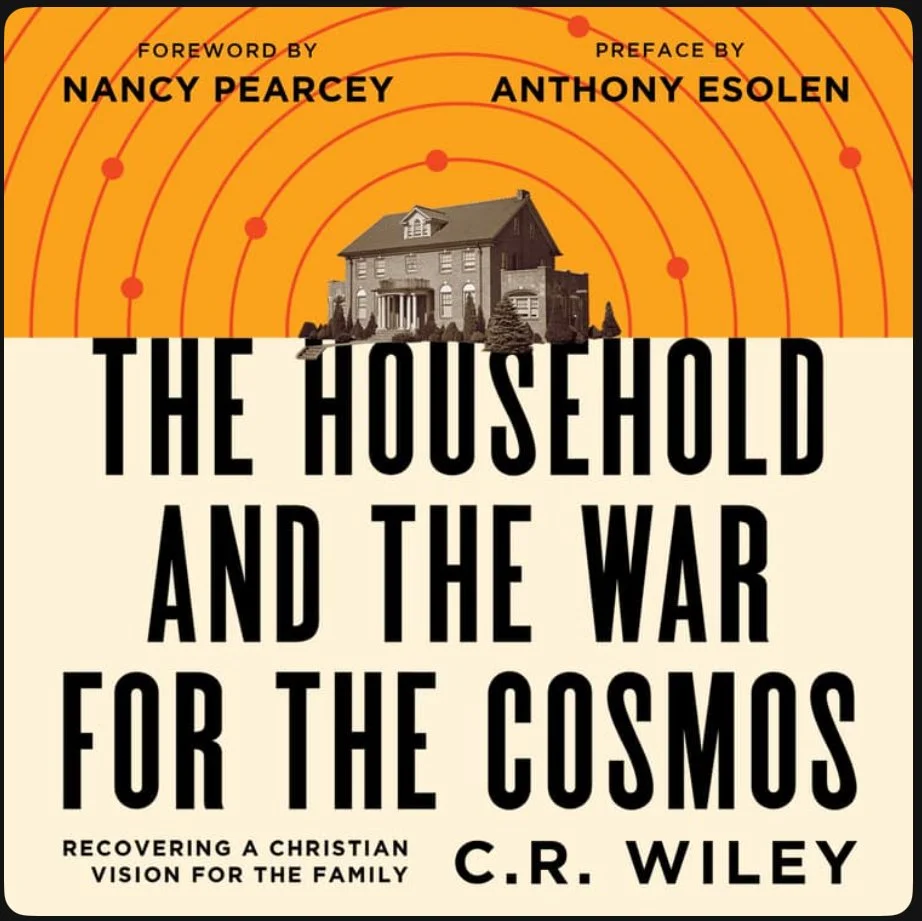
November 4, 2025
The Household and the War for the Cosmos by C.R. Wiley argues that the modern family has lost its central role and that the Christian household should be viewed as a "command center" for a larger cosmic battle. The book contrasts modern society's individualism with a historical view of the household as a place where people had duties like "piety," "duty," and "honor" to previous and future generations. Wiley contends that the biblical narrative of Abraham's relationship with God provides a greater framework for understanding the household's purpose than ancient myths, urging parents to re-establish and re-order their families to reflect God's intentions.
Key arguments
The "household" as a command center: Wiley posits that the household is not just a shelter but a base from which to launch attacks in a larger cosmic struggle, as described in the Bible.
Loss of historical perspective: He argues that modern society has dislocated the family by making it seem unimportant, unlike in the past when people saw themselves as part of an ordered cosmos and had duties to their families and communities.
Critique of individualism: The book challenges the modern, individualistic view of the family, which Wiley claims has weakened its structure and purpose.
Emphasis on "piety" and "duty": The author highlights ancient values like "piety" (duty and honor), which he believes have been devalued by modern culture but are essential for the Christian to practice.
Biblical foundation: The book draws on the biblical narrative of Abraham and his God as a successor to older, failed myths and a foundation for understanding the Christian household's role in the "war for the cosmos".
Call to action: Wiley encourages parents, particularly fathers, to re-order their lives and households to reflect this Christian vision, which he believes is vital for the health of the person, family, and even the world.
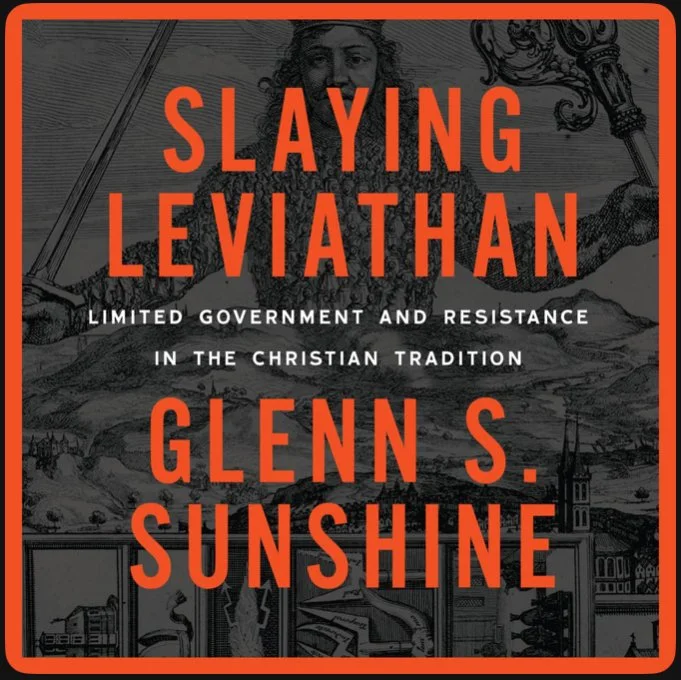
December 1, 2025
Slaying Leviathan by Glenn S. Sunshine traces Christian political thought from Augustine to the American founders, focusing on the development of limited government and resistance to tyranny. It argues that these concepts are rooted in Christian tradition and were synthesized by thinkers like John Locke, ultimately influencing the U.S. founders. The book aims to provide Christians with a framework to understand and respond to government overreach.
Historical survey: The book examines Christian political ideas across centuries, starting with Augustine and culminating with the political philosophy that influenced the American Revolution.
Core arguments: It highlights the consistent Christian tradition of vigilance against government tyranny and the advocacy for individual liberty.
Key influence: Slaying Leviathan emphasizes John Locke's role in synthesizing these ideas into a coherent philosophy of limited government.
Relevance to Christians: The book is written for a general audience, addressing the question of whether Christians can and should resist government overreach while remaining obedient to God.
Meaning of "Leviathan": In this context, "Leviathan" refers to the all-powerful, potentially tyrannical state, drawing a parallel to the biblical sea monster that represents chaos.
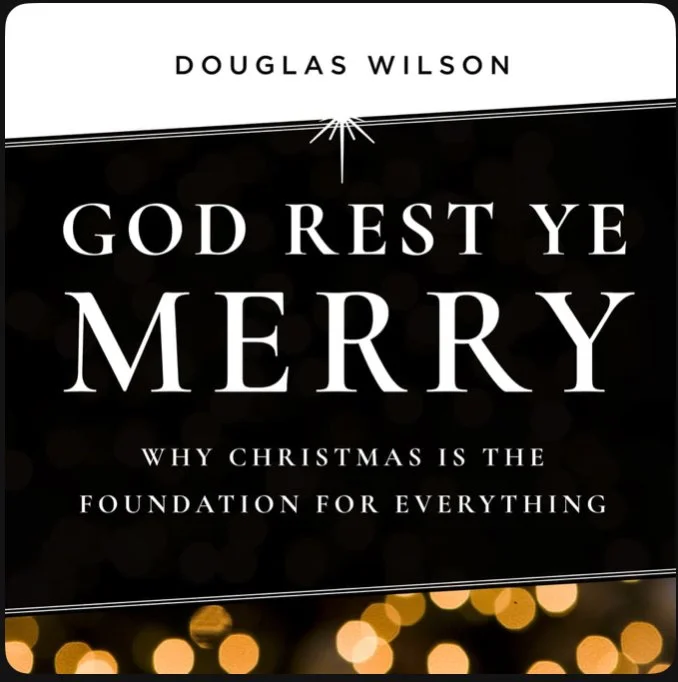
January 5, 2026
God Rest Ye Merry
by Douglas Wilson is a book that aims to rekindle a deeper Christian understanding of Christmas and Advent, moving beyond superficial traditions. It critiques false reasons for celebrating, explores the historical and political significance of the first Christmas, and offers theological perspectives on gift-giving and celebration. The book includes unique elements like the "Enlightenment Assumptions Detector" and daily Advent meditations, making it a guide for a more profound and robust Christmas celebration.
Key themes and topics
Critique of modern Christmas: The book challenges both modern secularization and objections to Christmas, arguing that both are often based on false assumptions.
The Incarnation: It explores the theological significance of the Incarnation, emphasizing the historical and political nature of Jesus's birth.
Historical context: Wilson highlights the importance of Israel in Christmastime history and offers unconventional insights, such as the inclusion of Herod's soldiers in nativity scenes.
Theology of celebration: The book defends robust celebration, including feasting and gift-giving, arguing against "Scroogeism" while emphasizing that sin is not in the stuff itself but in the human heart.
Enlightenment Assumptions Detector: A tool to help readers understand the symbolism of Christmas by detecting underlying assumptions.
Advent resources: A significant part of the book is dedicated to providing daily meditations and prayers for the Advent season to encourage deeper reflection.